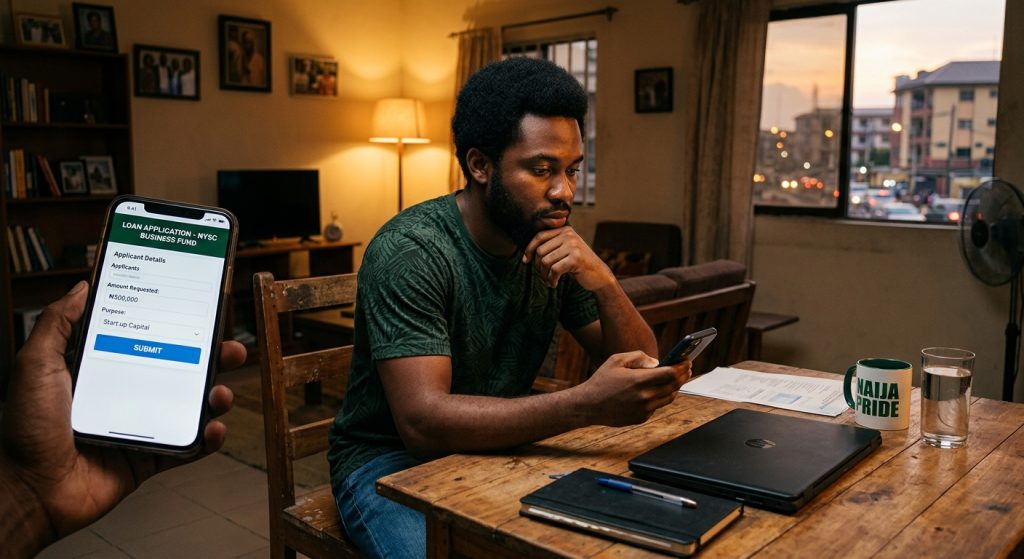
You applied for a loan. Got rejected. The app returned something vague — “you do not qualify at this time” — and now you are sitting here wondering if a bad credit score has permanently locked you out of borrowing money in Nigeria.
It has not.
But getting a loan with bad credit score in Nigeria requires the full picture — not the sugar-coated version fintech companies put in their ads. This guide will tell you exactly what bad credit means in the Nigerian context, which lenders will still work with you, and how to protect yourself from the loan sharks that specifically prey on people in your situation.
No judgment. No fine print. Just facts.
What “Bad Credit Score” Actually Means in Nigeria
Nigeria has three main credit bureaus: CRC Credit Bureau, FirstCentral Credit Bureau, and CreditRegistry. These agencies collect repayment data from banks, microfinance institutions, and fintech lenders, then generate a credit score — usually on a scale of 300 to 850.
Here is a simple breakdown:
| Score Range | What It Means |
|---|---|
| 700 – 850 | Excellent — easy loan approval |
| 600 – 699 | Good — most lenders will approve |
| 500 – 599 | Fair — selective approvals, higher rates |
| 300 – 499 | Poor / Bad Credit — many rejections |
| No record | Thin File — treated cautiously |
Important: Many Nigerians — especially market traders, artisans, and informal workers — do not have a score at all. This is called a “thin file.” Lenders treat thin files almost identically to bad credit because there is no repayment history to analyse. According to the Central Bank of Nigeria’s financial inclusion data, over 38% of bankable Nigerians remain outside the formal credit system — meaning millions are navigating the thin-file problem right now.
Why Your Credit Score May Be Low (Common Nigerian Scenarios)
Before you can fix a problem, you need to understand why it exists. The most common reasons Nigerians end up with bad or low credit scores include:
- Defaulting on a previous loan — even a small one from a loan app
- Late repayments — paying back two or three weeks after the due date
- Multiple loan applications in a short period — each hard inquiry can drop your score
- Loan account still showing as overdue — even after you paid, if the lender never updated the bureau
- Being a guarantor for someone who defaulted — their failure can reflect directly on your record
- Never borrowing formally — no credit history means no score (thin file)
The third and fourth points are especially frustrating. You may have repaid your loan in full, yet your score still reflects a problem because the fintech lender failed to update CRC or FirstCentral. This happens more often than it should in Nigeria — and crucially, it is disputable.
Can You Actually Get a Loan With Bad Credit in Nigeria? The Honest Answer
Yes — but with conditions.
Traditional commercial banks (GTBank, Access Bank, Zenith Bank) will almost certainly reject a personal loan application if your credit score sits below 600. They rely heavily on bureau reports and maintain rigid risk policies that leave little room for individual discretion.
However, the Nigerian fintech lending landscape has changed dramatically. Many CBN-licensed digital lenders now use alternative data to make lending decisions — meaning they look beyond your credit bureau score and examine:
- Your BVN-linked account transaction history
- Your average monthly inflow and outflow patterns
- Your mobile usage and data behaviour (with your explicit permission)
- Your employment or business income consistency
- Your repayment behaviour directly on their own platform
This is precisely why someone with a bad credit score can be approved by a fintech app while being rejected by a bank. The fintech builds its own picture of your financial behaviour — it is not entirely dependent on CRC’s bureau report.
The honest catch: Lenders who approve bad credit borrowers consistently charge higher interest rates to compensate for the perceived lending risk. This is standard practice globally, not a uniquely Nigerian phenomenon. You must factor this into your repayment planning before accepting any offer.
What Lenders Check Besides Your Credit Score
Understanding what else lenders examine gives you a genuine strategic advantage when your score is working against you.
1. Bank Statement Activity
Your last 3–6 months of transactions tell a detailed story. Regular income — even from informal sources — significantly improves your approval probability.
2. BVN Data
Your Bank Verification Number links your identity across financial institutions. Lenders use it to confirm your identity, check for existing unpaid loans across the industry, and verify age and employment status simultaneously.
3. Debt-to-Income Ratio
If your existing monthly loan repayments already consume more than 40% of your income, most lenders will decline you — regardless of your credit score.
4. Time on Platform
If you have borrowed from a specific app previously and repaid — even partially — many platforms will extend credit to you faster than a brand-new applicant with no history on their system.
5. Phone and Behavioural Data
Some fintech apps (with your consent, disclosed during sign-up) analyse call patterns, airtime recharge frequency, and app usage to estimate financial discipline. This is legal when transparently disclosed in the loan agreement terms.
Types of Loans Available to Bad Credit Borrowers in Nigeria
Not every loan product is designed exclusively for prime borrowers. Here is what is realistically accessible to you:
Fintech Personal Loans
Apps like SmartLoans Nigeria, Carbon, FairMoney, and Palmcredit use alternative scoring models. Loan amounts typically range from ₦5,000 to ₦500,000 with repayment tenures of 7 days to 12 months. These represent your most accessible option when credit history is thin or poor.
Salary Advance Loans
If you are a salary earner, many platforms will advance your next paycheck with minimal credit checking — because your employer’s payroll structure serves as the underlying security. Your bureau score matters significantly less here than your salary consistency and employment verification.
Cooperative Society Loans
If you belong to a cooperative — through a trade union, church, or market association — they typically lend based on membership contribution history, not credit bureau scores. Interest rates are usually far lower than fintech app rates.
Microfinance Bank Loans
CBN-licensed microfinance banks serve low-income Nigerians and conduct simpler credit assessments. They are more flexible on credit history, though some require a guarantor for larger loan amounts.
What to Avoid Completely: Informal money lenders (“loan sharks”) who offer cash without formal documentation. These are entirely unregulated, charge exploitative rates, and fall completely outside CBN and FCCPC consumer protection frameworks. There is no legal recourse if they abuse or harass you.
Lender Comparison: Who Works With Bad or Thin Credit?
| Lender Type | Credit Score Required | Approval Speed | Interest Rate Range | Best For |
|---|---|---|---|---|
| SmartLoans Nigeria – LendSafe | Low/Thin accepted | Same day | Competitive, CBN-compliant | Urgent cash, salary earners, traders |
| Commercial Banks | 650+ usually required | 3–7 days | Lower rates, strict terms | Prime borrowers only |
| Carbon (Paylater) | Moderate | Minutes | 5–30% per month | Return borrowers |
| FairMoney | Low to moderate | Minutes | Variable | Small to medium urgent loans |
| Microfinance Banks | Flexible | 1–3 days | Moderate | Community-based borrowers |
| Cooperatives | No bureau check | 1–5 days | Low | Members only |
Rates vary by loan amount, tenure, and individual financial profile. Always confirm current terms directly before accepting any offer.
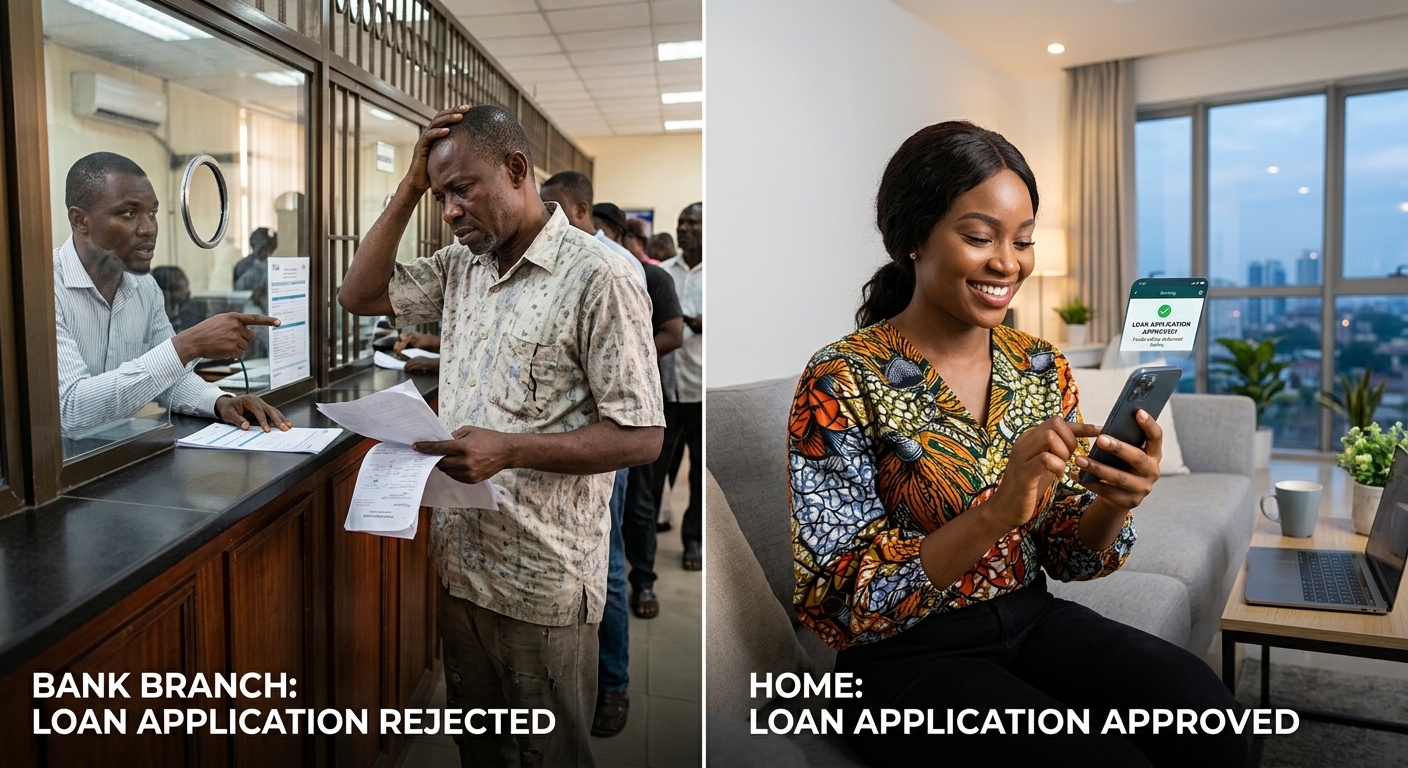
Red Flags to Avoid When You Have Bad Credit
Predatory lenders specifically target people with bad credit because the combination of urgency and limited options makes borrowers acutely vulnerable. Protect yourself deliberately.
Walk away immediately if a lender:
- Asks for upfront payment before releasing your loan — this is the single most common loan scam in Nigeria right now
- Cannot be found on the FCCPC registered digital lenders database or refuses to provide a CBN licence number
- Contacts you first via WhatsApp or unsolicited SMS with a loan offer you never requested
- Does not show a clear, itemised repayment schedule before you sign anything
- Threatens to contact your phone contacts within 24 hours of a missed payment — this directly violates FCCPC consumer protection directives on digital lending
- Lists fees that are not explicitly disclosed in the loan agreement upfront
Your financial stress is real and valid — but falling into a scam will compound your situation severely. Thirty seconds of verification on the FCCPC website can save you months of harassment and financial damage.
How to Improve Your Loan Approval Chances Right Now
You do not need six months of credit rehabilitation to improve your immediate approval odds. These actions have real, near-term impact:
1. Borrow a smaller amount first.
Applying for ₦10,000 instead of ₦100,000 dramatically increases approval probability. Build a repayment track record on smaller amounts, then request higher limits progressively.
2. Apply to lenders where you already have account history.
Platforms where you have transacted — even without ever borrowing — hold more behavioural data on you and are statistically more likely to approve your first loan request on their system.
3. Clean up your bank statement before applying.
Reduce failed transactions and unnecessary overdrafts for two to four weeks before submitting any application. Algorithmic credit assessments read a cleaner statement significantly more favourably.
4. Do not apply to five apps in one day.
Multiple hard credit inquiries in a short window signal desperation to scoring models and compound the damage to your score. Be strategic — apply to one or two well-chosen lenders only.
5. Dispute errors on your credit report.
Visit CRC Credit Bureau or FirstCentral’s website to request your free annual credit report. If a loan appears as unpaid when you have proof of settlement, file a formal dispute immediately. Verified corrections typically reflect within 30–60 days and can meaningfully move your score upward.
How SmartLoans Nigeria Helps Bad Credit Borrowers
SmartLoans Nigeria was built with the understanding that credit bureau scores do not tell the complete story of a Nigerian borrower’s financial life. The platform uses alternative data scoring alongside bureau reports — making it genuinely possible for borrowers with low scores, thin files, or no formal credit history to qualify for funding.
This is particularly relevant for first-time borrowers, informal sector workers, and traders whose income does not always flow through channels that traditional bureau-based systems can see clearly. If you have been rejected elsewhere, checking your eligibility on SmartLoans Nigeria is a logical and practical next step — the pre-qualification check does not affect your credit score.
Frequently Asked Questions
Can I get a loan in Nigeria with a 400 credit score?
Yes. Some fintech lenders and microfinance banks will still consider your application, particularly if your bank statement demonstrates consistent income activity. A 400 score is poor, but it is not the only data point modern alternative lenders use in their decision-making process.
Will applying for a loan make my bad credit score worse?
A single hard inquiry can drop your score by 5–15 points temporarily. The real danger lies in applying to multiple lenders simultaneously — each inquiry compounds the negative impact. Apply selectively and strategically.
How long does bad credit stay on my Nigerian credit report?
Negative information typically remains on your bureau record for 3–7 years, depending on the specific bureau and the nature of the default. However, consistent positive new activity — repaying even small loans on time — begins improving your score within months and gradually outweighs the negative history over time.
What if I have never borrowed before — do I have a credit score?
If you have never taken a formal loan or used credit, you likely have a thin file — meaning no score rather than a bad score. Starting with a small loan and repaying on time is the fastest available path to building a positive credit identity that unlocks better borrowing options progressively.
Is it safe to give a loan app access to my phone data?
Only when the app is FCCPC-registered and the specific data access requested is clearly disclosed in its terms and conditions. Never grant permissions to unverified or unregistered apps. Legitimate lenders will always explain precisely what data they access and the specific reason they need it.
The Bottom Line
A loan with bad credit score in Nigeria is genuinely possible — but only if you are deliberate about where you apply, what you borrow, and how you protect yourself from lenders that specifically exploit borrowers in vulnerable positions.
The Nigerian fintech market has opened real doors for people the traditional banking system locked out entirely. But those doors come with higher borrowing costs — and some of them lead directly to predatory traps designed to worsen your situation.
Borrow only what you can confidently repay. Choose CBN-licensed or FCCPC-registered lenders exclusively. Start small, repay on time, and your credit score will follow your behaviour.
Ready to check what you qualify for — without damaging your credit score further?
Apply on SmartLoans Nigeria today. Fast, transparent, and built for real Nigerians — including those the banks already turned away.
👉 Apply Now at SmartLoans.ng — Takes Less Than 5 Minutes
Information in this article is accurate as of 2026. CBN regulations and individual lender policies change regularly — always verify current terms directly with your chosen lender before submitting any application.