It is 9:47 PM on a Thursday. Your landlord has been calling since Monday. You downloaded a loan app, filled the form, pasted your BVN, and tapped “Submit.” Now your phone shows: “Application Under Review.”
You are staring at the screen wondering: What are they looking at? What did they find? Is my BVN blacklisted? Did that one loan I defaulted on two years ago just follow me here?
This uncertainty keeps millions of Nigerians from understanding why they get rejected, why they get approved for ₦10,000 when they asked for ₦50,000, or why the same app that lent them money last quarter is now declining them.
This article explains every layer of what a Nigerian loan app checks the second you submit your BVN — in plain language, with nothing hidden. Understanding BVN loan verification Nigeria 2026 standards can be the difference between a declined screen and cash in your account tonight.
What Your BVN Actually Is (and Is Not)
Let us start by killing a dangerous myth: your BVN is not a loan approval code. It is an identity anchor.
The Bank Verification Number is an 11-digit biometric identifier issued by the CBN through NIBSS. It was introduced in 2014 to reduce fraud by linking your fingerprints, photo, name, date of birth, and phone number to a single financial identity across every bank account you own.
What your BVN contains:
– Full name as registered with your bank
– Date of birth
– Phone number linked at enrollment
– Enrolled bank(s)
– Biometric data (fingerprints, facial image)
What your BVN does NOT contain:
– Your account balance
– Your salary amount
– Your loan history (that lives in the credit bureaus, not the BVN database)
– A “blacklist” status
Your BVN is the key that opens the door. What is behind that door — that is what lenders actually care about during BVN loan verification in Nigeria.
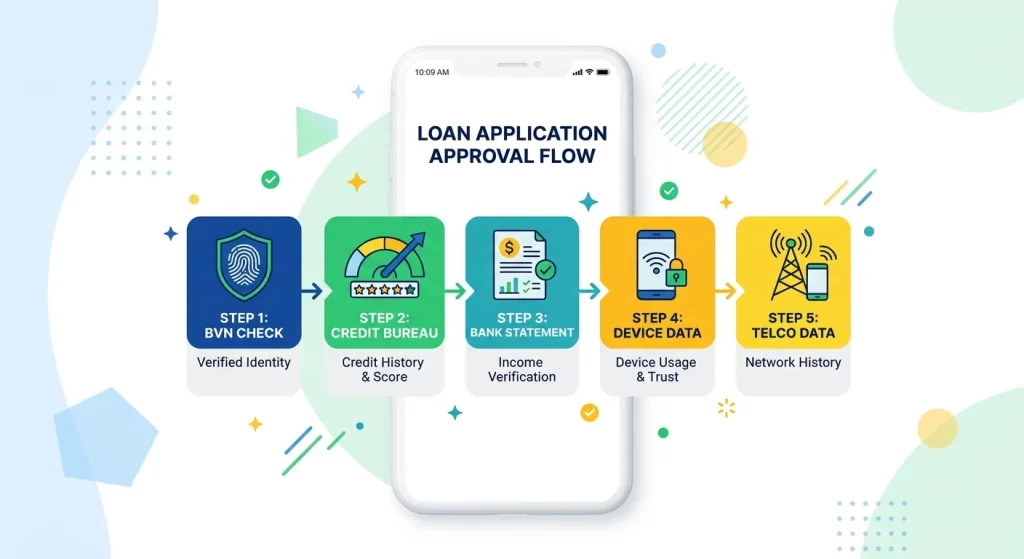
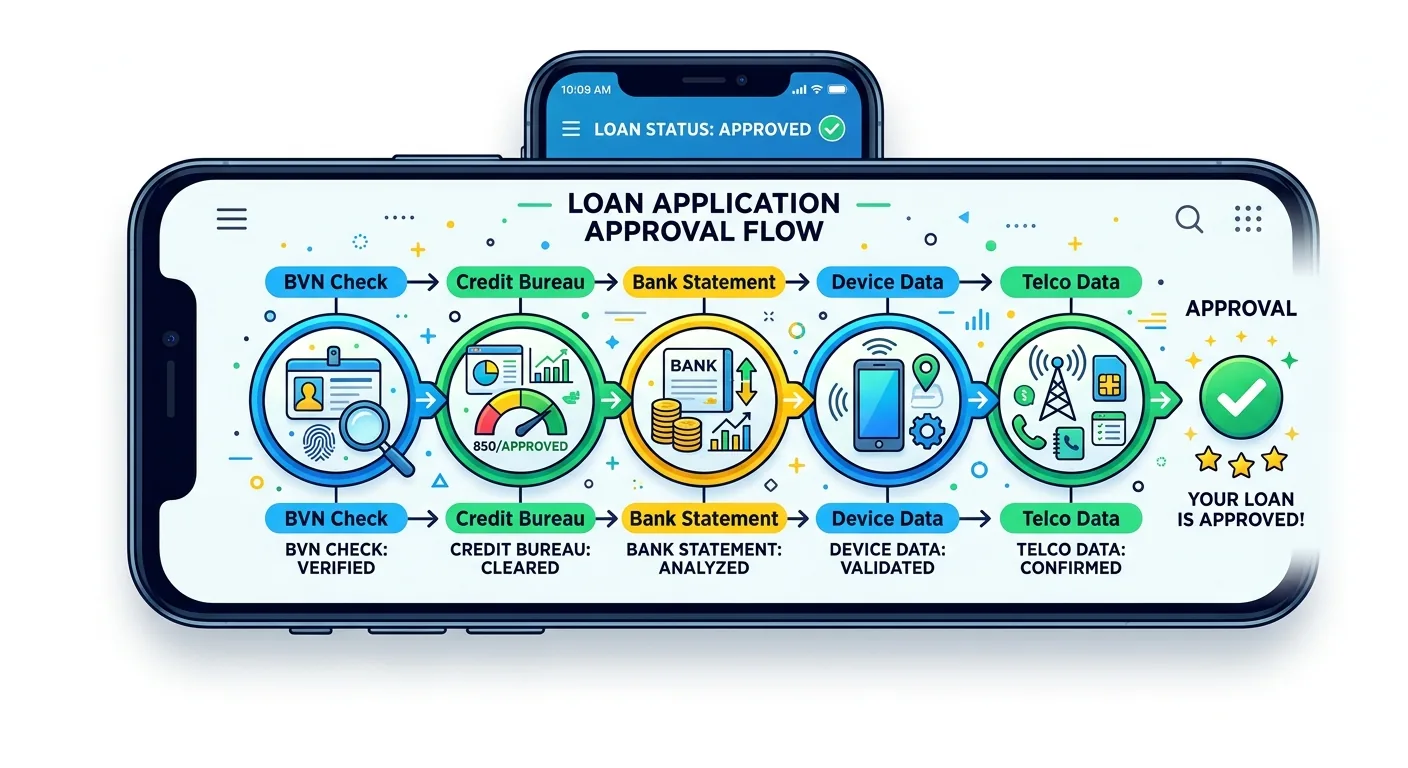
The 5 Data Layers Lenders Pull During Verification
When you submit your BVN to a loan app, you are authorising a chain of checks that happens simultaneously in seconds. Here are the five layers every serious lender runs as part of BVN loan verification Nigeria 2026 standards:
Layer 1: BVN Identity Verification (via NIBSS)
The app pings NIBSS to confirm that the BVN you entered matches the name, date of birth, and phone number you provided in the form. If your name on the app says “Emeka Okafor” but your BVN says “Emmanuel Chukwuemeka Okafor,” that mismatch alone can flag your application or slow it down.
Common rejection trigger: Name on form does not exactly match BVN name — this happens frequently with shortened or nickname versions of legal names.
Layer 2: Credit Bureau Pull (CRC, FirstCentral, or CreditRegistry)
Most serious loan apps in Nigeria pull your credit report from one or more of Nigeria’s three licensed credit bureaus. Your report shows:
– Every loan you have taken in the past from any reporting lender
– Whether you repaid on time, late, or not at all
– Outstanding loan balances across lenders
– Number of credit enquiries made in the past 6–12 months
– Your credit score (typically on a 300–850 scale)
A thin credit file is not automatically disqualifying — but it means the lender has no data to verify your trustworthiness, so they typically offer lower amounts or higher rates. A file with active defaults will likely result in outright rejection.
Layer 3: Bank Statement Analysis (Open Banking or Manual Upload)
Many apps now request either direct open banking access — you authorise, they read, they cannot transact — or a 3–6 month bank statement PDF upload.
What they analyse:
– Average monthly inflow (your effective income, not what you declared)
– Regularity of income (salary credited same week every month reads as stable)
– Existing loan repayment deductions (direct debits to other lenders reduce your available income)
– Gambling transactions or frequent POS reversals (flags risk behaviour automatically)
– End-of-month balance pattern (consistently zero accounts signal maximum financial stress)
For many lenders, your bank statement tells a more accurate story than your credit score alone.
Layer 4: Device and Behavioural Data
Most loan apps collect device metadata with your permission at installation:
– Phone model and estimated age
– SIM card details — network, number of SIMs, how long the number has been active
– App usage patterns
– Contact list metadata (not names — patterns that some lenders use as a social graph risk signal)
– GPS location data to confirm you are physically in Nigeria
This is the most controversial layer of loan app data Nigerian lenders collect. It is legal under declared app permissions — but it is precisely why you should read permission requests before installing any loan app.
Layer 5: Telco Data (Where Applicable)
Some lenders — particularly mobile-first platforms partnered with MTN, Airtel, or Glo — access aggregated telco data with your consent:
– How long you have held your current SIM
– Whether your line is prepaid or postpaid
– Recharge consistency over past months
A SIM active for 3+ years tells a very different risk story than one registered last week.
What a Red Flag Looks Like on Your Profile
Lenders use automated decision engines — algorithms scoring your risk profile in real time. Here is what immediately raises your risk score during the BVN loan verification Nigeria process:
- BVN name mismatch with the name entered on your application
- Multiple loan applications within 7 days — too many hard inquiries signals financial desperation
- Active overdue loans flagged on your credit bureau report
- Irregular income pattern — deposits that appear random rather than salary-consistent
- High loan-to-income ratio — existing debt repayments consuming 40–50%+ of verified monthly inflow
- Very new BVN or bank account — accounts opened less than 3 months ago are universally high-risk
- Phone number not matching BVN registration — a changed number never updated with NIBSS creates friction automated systems cannot resolve
Why Honest, Hardworking Nigerians Still Get Rejected
Rejection does not always mean you are a bad borrower. Sometimes your data tells an incomplete or inaccurate story.
The thin file problem: You have always borrowed from friends or your cooperative — no formal loan history means no credit score. Lenders cannot statistically verify your trustworthiness.
Ghost data: You repaid a loan two years ago, but the lender never updated the bureau record. Your file still shows it as outstanding. You can dispute this directly with CRC Credit Bureau or FirstCentral — it is your legal right.
Wrong identity details: A missing middle name, a date of birth entered incorrectly at BVN enrollment, or a phone number change never updated with NIBSS — any single discrepancy creates friction.
The five-apps-in-one-afternoon trap: Applying to five loan apps simultaneously is a common move. It is also the fastest way to tank your approval chances at all five, because every hard inquiry appears on your bureau report within hours.
What LendSafe Specifically Checks — Transparently
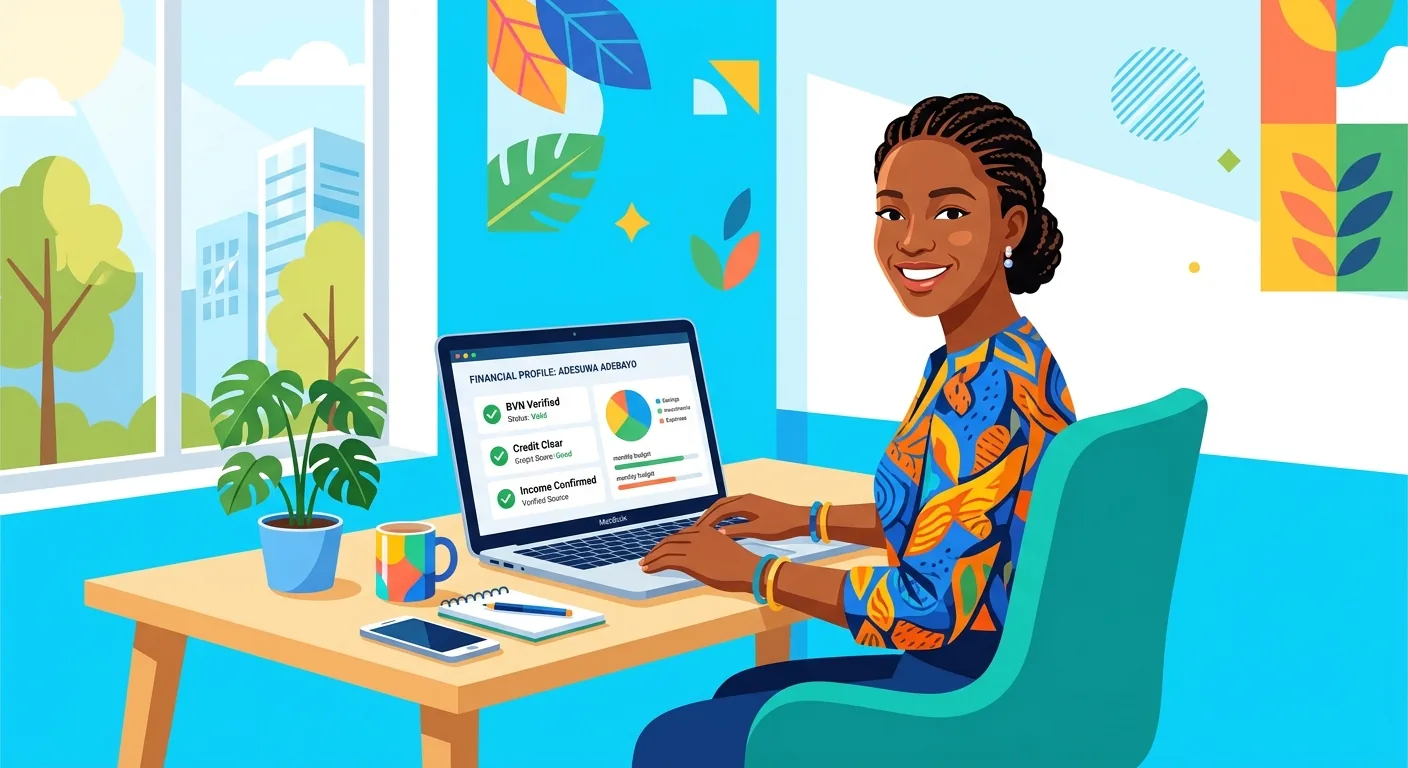
LendSafe performs BVN identity verification through NIBSS, credit bureau screening, and bank statement analysis as part of its BVN loan verification Nigeria 2026 process. LendSafe does not sell your data to third parties. LendSafe does not make decisions based on your phone contact list content.
What matters most to LendSafe:
1. Your identity matches your BVN — name, date of birth, and phone number must align
2. You have an active bank account with consistent inflows — income is verified, not just declared
3. You have no unresolved overdue loans with other formal lenders — active defaults are a hard stop
4. Your requested amount is proportionate to your verified income — LendSafe does not approve amounts that push your debt-to-income ratio beyond a healthy threshold
LendSafe is FCCPC-compliant and CBN-registered. If you are declined, you will receive a reason code — not silence.
How to Clean Up Your Profile Before You Apply
You cannot game the system — but you can ensure your data accurately reflects your real financial behaviour. These steps are what loan eligibility Nigeria 2026 standards reward:
Step 1: Update your BVN details if anything has changed.
Visit any bank branch or use your bank’s official app to update your BVN phone number, address, or name. This is free and typically processed within 48 hours.
Step 2: Pull your credit report before applying.
Obtain your free annual credit report at creditregistry.ng or via the FirstCentral Consumer Portal. Dispute any inaccuracies with repayment evidence. Allow 2–4 weeks for confirmed corrections to reflect.
Step 3: Clear small outstanding debts first.
A ₦2,500 unpaid loan balance from 18 months ago can still flag your profile as an active delinquency. Pay it, then request the lender update your bureau record.
Step 4: Do not submit multiple applications simultaneously.
Choose one lender. Apply. Wait 24–48 hours before trying a second application if declined.
Step 5: Use the bank account that shows your most consistent deposit history.
If you operate two accounts, link the one with the cleaner, more regular income pattern.
Step 6: Confirm your application phone number matches your BVN-registered number.
This single step eliminates one of the highest-frequency friction points in BVN loan verification Nigeria processes.
What Happens to Your Data After You Apply
Under Nigeria’s NDPR and FCCPC Digital Lending Guidelines, licensed lenders are legally required to:
– Disclose every category of data they collect before you submit anything
– Use your data only for loan decisioning — not marketing to third parties
– Allow you to formally request deletion of your personal data after your loan relationship ends
If a loan app is not CBN-licensed or does not appear on the FCCPC’s registered digital lenders list, you have no enforceable legal protection over what happens to your BVN and bank data. This is the documented mechanism behind most loan app harassment cases reported in Nigeria.
Verify an app’s license status at fccpc.gov.ng before submitting your BVN to anyone.
Quick FAQ
Q: Can a lender see my exact salary figure through my BVN?
No. Your BVN contains no salary data. Lenders calculate your effective income only when you share your bank statement or grant open banking access.
Q: Does applying for a loan damage my credit score?
One application generates one inquiry — minimal impact. Five applications within one week create a cluster that can suppress your score for up to six months.
Q: Can I get a loan if my BVN phone number is different from my current number?
You may face delays or rejection. Update your BVN-registered phone number at your bank first — one branch visit, processed within 48 hours.
Q: Is it safe to give my BVN to a loan app?
Only to CBN-licensed, FCCPC-registered apps. Never share your BVN with anyone who contacted you via WhatsApp, Instagram DM, or unsolicited SMS.
Q: What if my credit bureau report shows a loan I already repaid?
Dispute it at creditregistry.ng with your repayment evidence. Under the NDPR and Credit Reporting Act, the bureau must investigate and correct confirmed errors — this is your legal right.