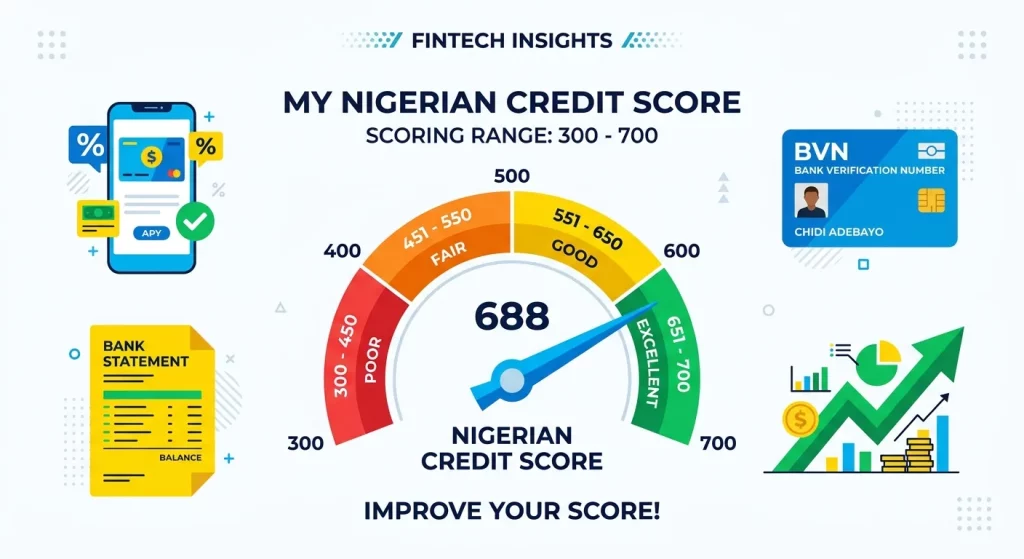
If you’ve searched for a loan with bad credit score Nigeria lenders will actually approve, you’ve probably already been rejected at least once. Maybe more. And somewhere between the declined message and right now, you’ve heard a lot of things that may or may not be true.
This guide cuts through seven of the biggest myths — and replaces them with the honest picture of what is actually possible in this year.
What “Bad Credit Score” Actually Means in Nigeria
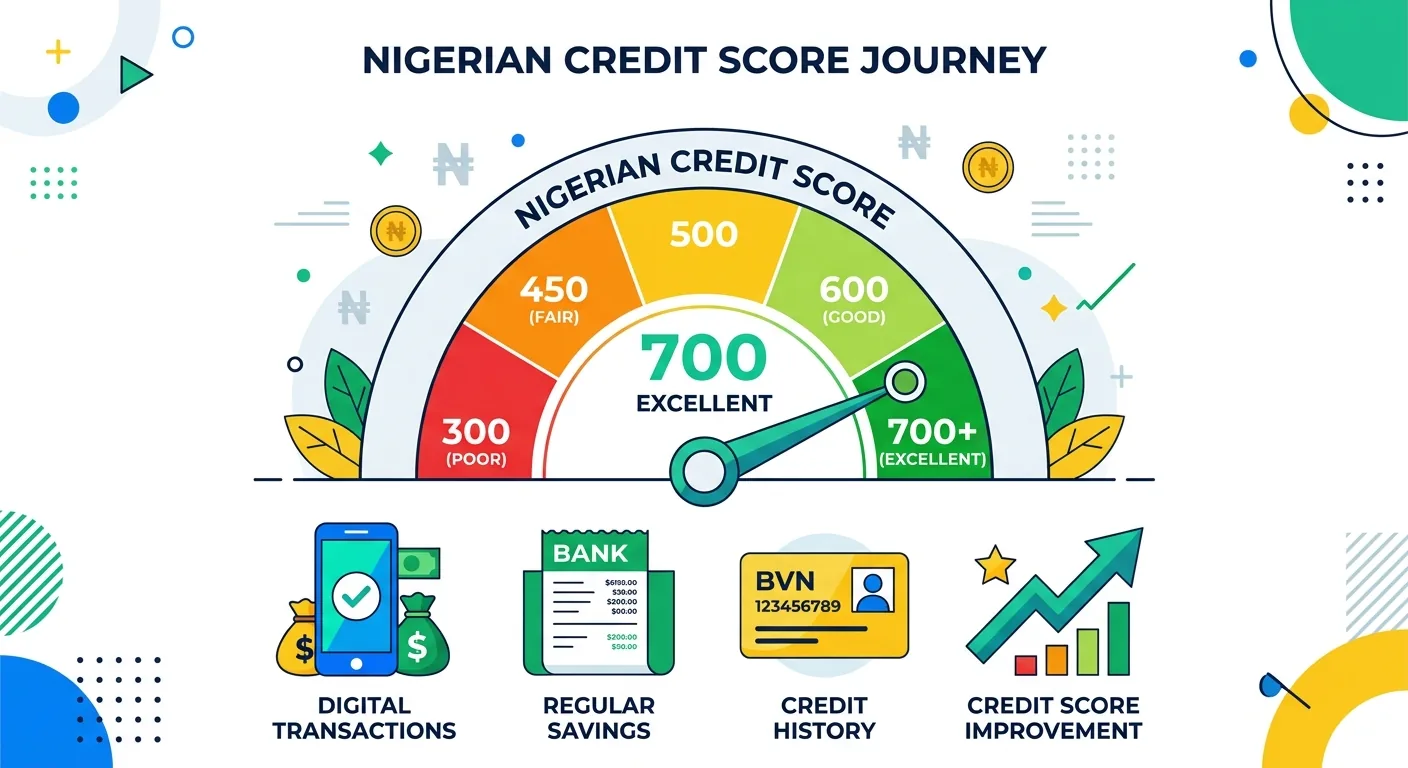
Before the myths, the foundation. Nigeria runs on two main credit bureaus: CRC Credit Bureau and FirstCentral Credit Bureau. Every time you borrow from a licensed lender — a bank, microfinance institution, or loan app — that lender reports your behaviour. Repaid on time? Good entry. Missed payments or defaulted? Negative entry.
CRC scores run from 300 to 850. Below 580 is considered poor. Below 400 triggers automatic rejection at most traditional lenders. Many Nigerians have damaged scores without knowing — a forgotten ₦5,000 loan app balance from two years ago can sit in your bureau file like a landmine, quietly blocking every new application.
Myth 1: A Bad Credit Score Means Every Door Is Permanently Closed
The truth: It means certain doors are closed right now — not forever.
Commercial banks will not offer you a ₦500,000 personal loan with a score below 580. That is accurate. But alternative and risk-based lenders exist specifically to serve borrowers that traditional institutions decline. They include licensed digital loan apps, salary advance products, and cooperative lending structures.
A loan with bad credit score Nigeria borrowers can realistically access today typically looks like this:
– Starting amounts of ₦5,000 to ₦50,000
– Tenors of 7 to 30 days
– Higher interest rates that reflect the lender’s elevated risk
– Auto-debit repayment mechanics
Not perfect — but real, legal, and functional for genuine emergencies.
Myth 2: Alternative Lenders Don’t Check Anything
The truth: They check different things — often more things than a bank does.
Licensed alternative lenders who approve a bad credit loan in Nigeria supplement your bureau file with data that reflects your current financial reality:
Bank Statement Activity (Last 3–6 Months): Regular credits — even irregular ones — signal active income. A dormant account is a bigger red flag than a low bureau score.
BVN Verification: Non-negotiable for any legitimate lender. It links your identity across all accounts and flags any active loans elsewhere.
Income Consistency: Formal salary earners with predictable monthly credits score well here. Informal earners — traders, artisans — can still qualify when their account shows reliable inflow patterns.
Debt-to-Income Position: If your monthly inflow is ₦60,000 and existing loan repayments consume ₦45,000, the ₦15,000 headroom significantly limits what any responsible lender will approve on top.
Alternative Data (Some Digital Lenders): App usage patterns, duration of your phone number, and device stability — legal when disclosed in a data policy, used to assess character signals beyond what bureaus capture.
Myth 3: You Should Apply Everywhere at Once to Improve Your Chances
The truth: Multiple simultaneous applications actively hurt your chances and damage your score further.
Every application triggers a bureau inquiry. Multiple inquiries in a short window signal financial distress to lenders and to the bureau’s scoring model. Your score drops. Your file looks worse. The next lender sees an even more concerning picture.
The correct approach when seeking a loan with bad credit score Nigeria lenders will consider:
1. Pick one lender based on research
2. Apply once
3. Wait for the outcome — typically 24 to 48 hours for digital lenders
4. If rejected, wait several days before applying elsewhere
Myth 4: There’s Nothing You Can Do to Improve Approval Odds Before Applying
The truth: Several actions taken before you apply can meaningfully shift the outcome.
Pull your credit report first. Visit CRC Credit Bureau or FirstCentral’s portal. You are entitled to one free annual check. Errors are common — resolved loans still showing as active defaults, wrong balances, name mismatches. Each error can be formally disputed and corrected, sometimes lifting your score by enough to move from auto-reject to manual review.
Clear small outstanding balances. A ₦3,000 unpaid balance from two years ago may be precisely what is flagging your file. Pay it, get written confirmation, request the lender updates the bureau record.
Apply for a smaller amount than you need. If you need ₦30,000, apply for ₦15,000. Lower amounts carry less lender risk and significantly improve approval probability when your score is weak. Build toward larger amounts after establishing a repayment record.
Show account activity the week before you apply. Ensure recent credits appear in your bank account. Active transaction history directly influences alternative data scoring.
Myth 5: Higher Interest Rates on Bad Credit Loans Are Always Exploitative
The truth: Risk-based pricing is a real and legitimate concept — but exploitation also exists, and you need to know the difference.
A lender extending credit to a borrower with a poor bureau score is absorbing statistically higher default risk. Pricing that risk through a higher interest rate is standard practice globally — including in Nigeria’s CBN-regulated lending environment.
What separates legitimate risk-based pricing from exploitation:
– Transparent total repayment disclosure before you accept — you should see principal, fees, and interest clearly stated
– No upfront fees — legitimate lenders deduct fees from the loan or collect on repayment, never before disbursement
– Clear tenor and repayment date — no vague terms
– FCCPC registration — verifiable at fccpc.gov.ng
If a lender meets these criteria, a higher rate on a personal loan with poor credit in Nigeria is the cost of access — not a trap.
Myth 6: Loan Apps That Ask for No BVN Are More Flexible and Borrower-Friendly
The truth: No BVN requirement is a scam signal, not a feature.
BVN verification exists to protect borrowers as much as lenders. It confirms your identity, prevents fraudulent accounts from being opened in your name, and ensures that any loan agreement is linked to a real, verifiable person.
Any lender advertising a loan without BVN Nigeria as a selling point for bad credit borrowers is either operating illegally or positioning to harvest your personal data and collect upfront fees before disbursing nothing.
Before granting any loan app permissions on your phone, check the FCCPC’s registered digital lender registry. This takes two minutes and is the single most effective scam prevention action available to Nigerian borrowers.
Myth 7: Once You’re on a Credit Blacklist, You Stay There
The truth: Credit bureau records are dynamic, not permanent sentences.
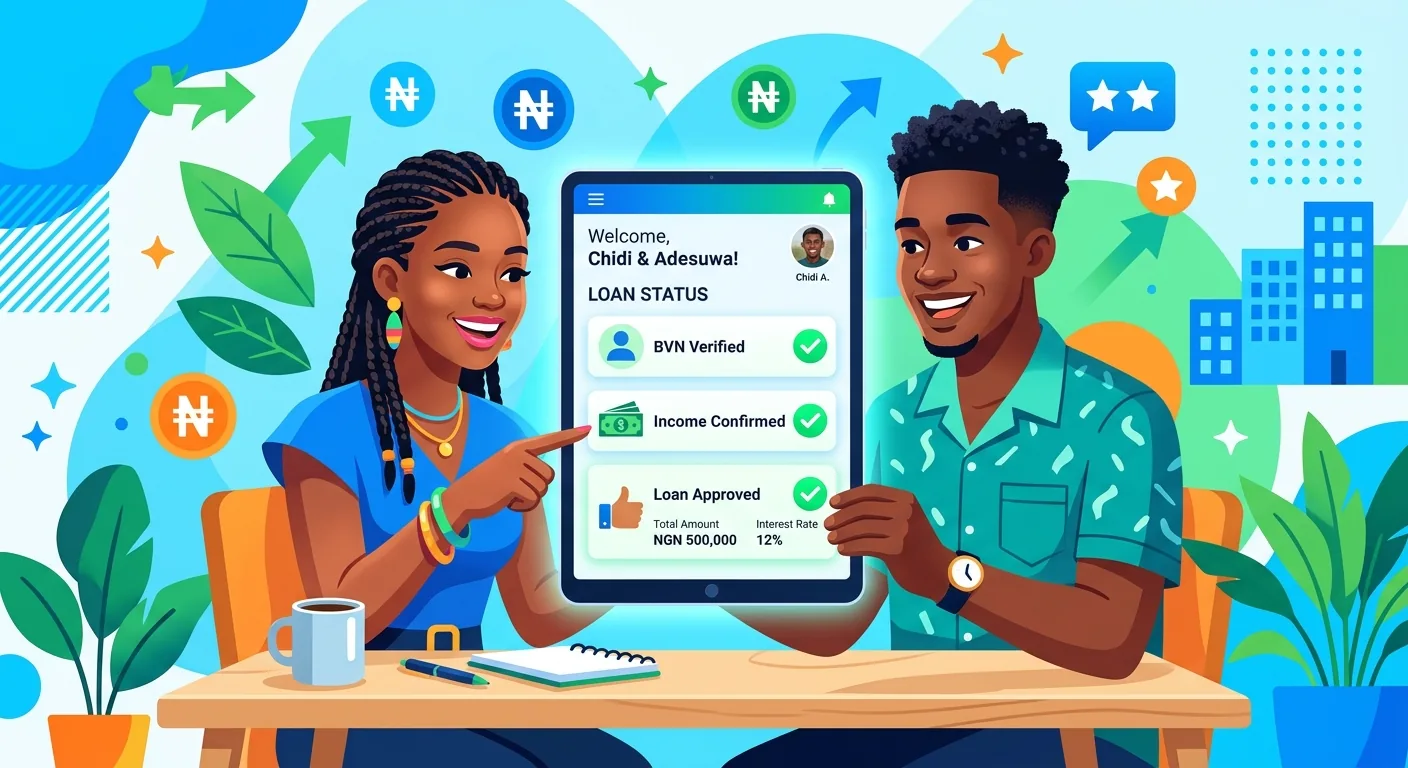
Every on-time repayment adds a positive entry to your file. Every cleared default that gets updated by the original lender improves your record. Nigerian credit bureaus reflect current behaviour — a borrower who had a terrible 2022 but has repaid three consecutive loans in 2024 and 2025 looks meaningfully different to a lender pulling their file in 2026.
The path out of a damaged bureau file for someone seeking a loan with bad credit score Nigeria lenders will progressively trust:
1. Access a small loan from a licensed alternative lender
2. Repay exactly on time — not early, not late
3. Repeat with a slightly larger amount
4. Each repayment record is reported to the bureau and rebuilds your score
This is not a 30-day fix. But it is a real, documented process that works.
LendSafe and Bad Credit — What to Expect
LendSafe is built for Nigerians whose financial lives do not fit neatly into a bureau scorecard. The approval model combines bureau history with real-time bank account activity, income pattern analysis, and repayment behaviour on the platform itself.
Your past credit mistakes are not ignored — they are weighed alongside evidence of your current financial position. If your bureau file is damaged but your account shows consistent income and no active defaults, LendSafe may still approve a first loan — typically a smaller starting amount to establish a track record.
Repay on time and your credit limit grows. Miss a payment and your limit is adjusted, your bureau file updated, and standard collection begins. No contact-list harassment. No upfront fees. No hidden charges.
LendSafe is FCCPC-registered and CBN-compliant — verifiable on the FCCPC consumer credit registry.
Your Next Step
If you are sitting with a poor credit score and a real financial need right now, here is the exact sequence:
- Check your CRC or FirstCentral report — know what lenders see before you apply
- Dispute errors and clear small outstanding balances — even a 20-point improvement changes outcomes
- Apply for 50% of your actual requirement — start smaller, build upward
- Complete your LendSafe profile fully — BVN, bank statement link, accurate income details
- Apply once and wait — no parallel applications
A loan with bad credit score Nigeria borrowers can access today does not have to mean expensive or exploitative credit forever. Every loan repaid on time rewrites that bureau file — one record at a time. And the Central Bank of Nigeria’s consumer credit framework continues to expand options for underserved borrowers who demonstrate improving repayment behaviour.
LendSafe Nigeria — Personal loans for real life. FCCPC registered. Available on Android and iOS.