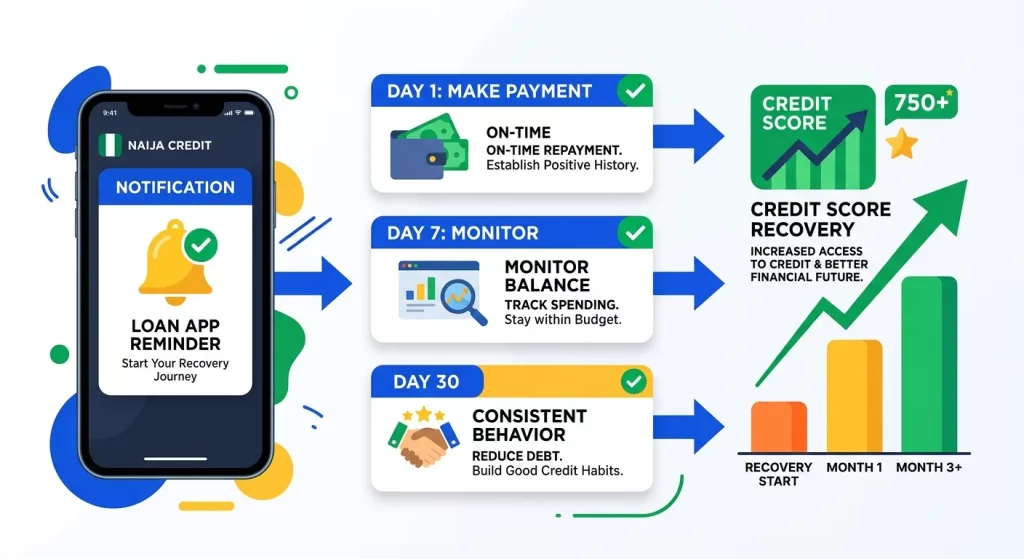
The fear of “what if I can’t pay?” shouldn’t stop you from getting help when you need it. But you deserve the full truth — not what loan apps want you to believe.
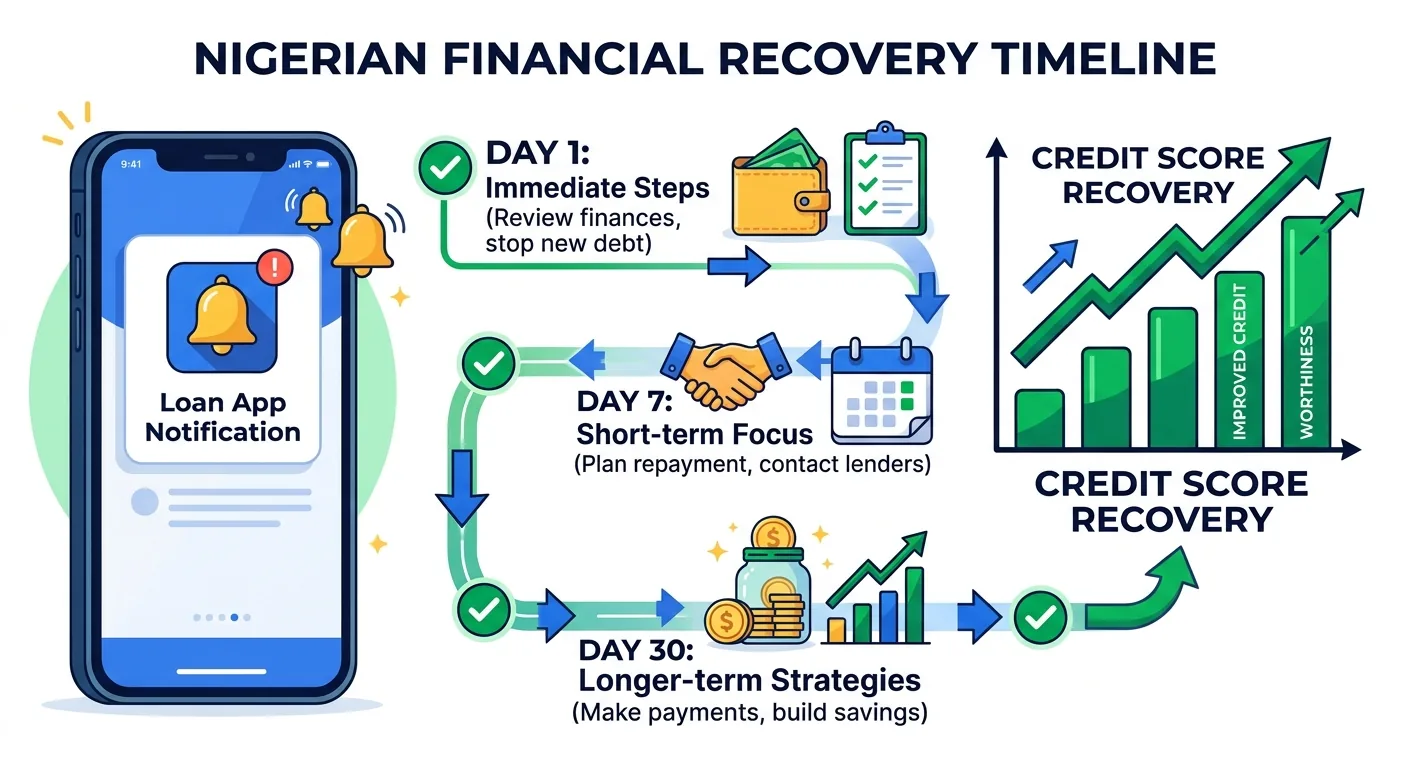
The Fear Nobody Talks About Before Borrowing
It is 11 PM. Your electricity bill is overdue and your landlord has been calling since morning. You have opened three loan apps, filled in your BVN, and stared at the “Apply Now” button for forty-five minutes without pressing it.
Not because you do not need the money. You do, desperately.
But somewhere in the back of your mind, a question is screaming: What happens to me if I cannot pay this back?
That fear is real and legitimate. Stories circulate on WhatsApp every week — loan app calling your boss, contacting your family, sending messages to your church group, threatening jail. Some are true. Some are exaggerated. Some are outright false.
This article separates every single one of them. By the end, you will know exactly what Nigerian law says about loan default Nigeria, what loan apps can legally do, what they absolutely cannot do, and what your first move should be if you are already behind on a repayment.
What “Loan Default” Actually Means in Nigeria
A loan default Nigeria situation simply means you have failed to repay according to the agreed schedule. Most digital loan apps classify a borrower as “in default” anywhere between 1 day and 30 days after a missed due date, depending on internal policy.
There is a critical difference between three stages:
- Delinquency: You are late — 1 to 29 days past due. Penalty fees are accumulating but options still exist. This is the most recoverable stage.
- Default: Typically 30 days or more past due. The lender may now escalate recovery actions and report to credit bureaus.
- Write-off: The lender has internally classified the loan as a loss. This does NOT mean the debt disappears — you still owe it in full, and it may be sold to a recovery agency.
Knowing which stage you are in determines exactly what leverage you have when you contact the lender.
What Happens in the First 1–7 Days After a Missed Payment
This is the period where most borrowers panic unnecessarily. Here is the realistic timeline for a missed loan repayment Nigeria scenario:
Day 1: An automated SMS or push notification — sometimes two or three. This is a system trigger, not a human making decisions about your life.
Day 2–3: A phone call from a customer service representative — usually scripted and polite, asking if you experienced a problem and when you can pay.
Day 3–5: Daily SMS reminders. Penalty fees begin accruing as stated in your loan agreement. This is legal and was disclosed at signing — always review your contract for the daily penalty rate before borrowing.
Day 5–7: Some apps begin contacting the emergency contacts you listed during registration. You provided those contacts voluntarily. The critical legal question is whether the app contacts people you did NOT list — that is an entirely different matter covered below.
The key takeaway: the first week is recoverable. A partial payment, a quick call, or a repayment extension request at this stage can reset the clock before the situation escalates into a formal loan default Nigeria record.
What Loan Apps Can Legally Do — And What They Cannot
This is where most Nigerians have been misled, either by fear or by unlicensed lenders who rely on you not knowing your rights.
What they CAN legally do:
- Charge late fees and penalty interest as disclosed in your signed loan agreement
- Report your default to licensed credit bureaus: CRC Credit Bureau, FirstCentral, and CreditRegistry
- Contact emergency contacts you explicitly listed on your application form
- Send repeated reminders via SMS, email, and in-app notifications
- Refer your debt to a licensed debt recovery agent or law firm
- Pursue civil recovery through a Nigerian court for significant outstanding amounts
What they CANNOT legally do under FCCPC and CBN guidelines:
- Contact people NOT on your listed emergency contacts — family members, colleagues, church groups, or neighbors — to shame or pressure you
- Send defamatory messages to your workplace or broadcast personal loan details to your social networks
- Threaten criminal prosecution for a civil debt (owing money is not a criminal offence in Nigeria)
- Use abusive, threatening, or humiliating language in any recovery communication
- Disclose your personal loan information to unauthorized third parties
- Impersonate law enforcement, EFCC, or court officials
The Federal Competition and Consumer Protection Commission (FCCPC) published its Limited Interim Regulatory/Registration Framework and Guidelines for Digital Lending in 2022, explicitly prohibiting harassment-based debt collection. Apps that violate these rules face delisting, fines, or operational suspension.
If a loan app is threatening to send your photo and debt details to everyone in your contact list, that app is operating outside Nigerian law. Full stop.
The BVN Blacklist Myth vs. The Credit Bureau Reality
One of the most common threats from a loan app debt collector Nigeria-side: “We will blacklist your BVN.”
Here is the truth. There is no central BVN blacklist in Nigeria. Your Bank Verification Number is a biometric identity tool managed by the Nigeria Inter-Bank Settlement System (NIBSS). Loan apps cannot block your BVN or unilaterally freeze your bank accounts simply by reporting you.
What does happen — and what is genuinely serious — is a negative report filed with one or more of Nigeria’s three licensed credit bureaus: CRC Credit Bureau, FirstCentral Credit Bureau, or CreditRegistry.
This matters enormously because:
- Future lenders who run a bureau check will see the default entry immediately
- You may face rejection across multiple loan platforms simultaneously
- The negative CRC credit bureau entry can remain on your file for up to 7 years under Nigerian credit reporting standards — unless the debt is settled and the lender formally updates the record
This is the actual loan default consequence Nigeria borrowers should take seriously — not the BVN blacklist myth, but the credit bureau entry that quietly follows you for years.
Can a Loan App Actually Take You to Court?
Yes — but rarely for small amounts, and the economics explain why.
Initiating civil proceedings in Nigeria costs real money: court filing fees, legal representation, and enforcement time. For loans under ₦50,000, it is economically irrational for most lenders to pursue loan default legal action Nigeria-side. For amounts above ₦100,000 — or where the borrower is a salaried employee with an identifiable income stream — the calculation changes significantly.
For smaller amounts, lenders are more likely to sell the debt to a third-party recovery agency at a discounted rate. That agency then becomes your new creditor and may pursue recovery more aggressively.
For salaried workers: some lenders who have your employer’s information may send a formal letter to your HR department. However, salary garnishment requires a court order to enforce. A threatening letter to your employer alone carries zero legal weight.
Harassment by Debt Collectors — Your FCCPC Rights in Plain Language
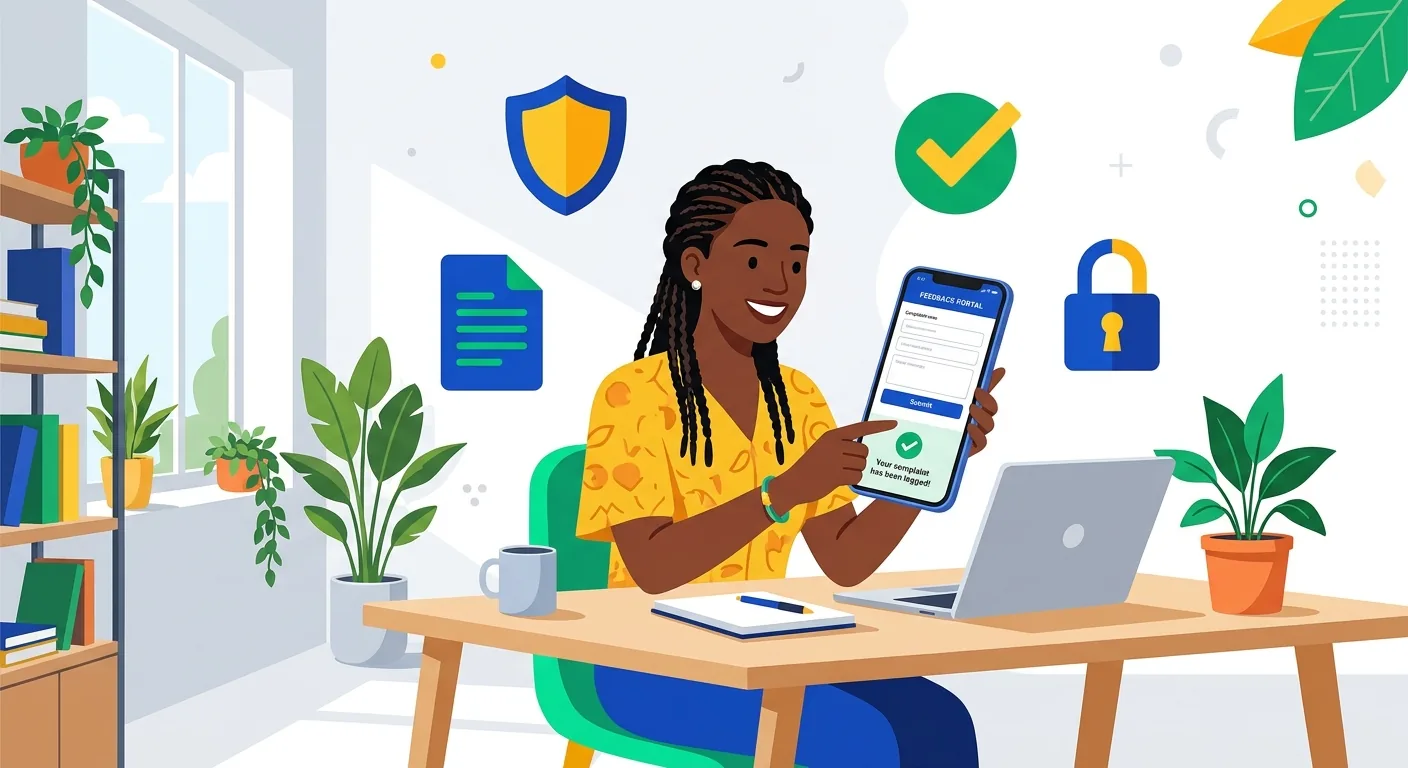
If a loan app or its recovery agent is calling you more than five times per day, contacting people not on your emergency list, sending threatening messages, or claiming to be police — you have enforceable rights under the FCCPC harassment loan app framework.
Here is exactly how to exercise them:
- Screenshot everything — messages, call logs, WhatsApp broadcasts. Date and time stamps are critical evidence.
- File a complaint at the FCCPC Consumer Portal: consumer.gov.ng. The process is free and completed online.
- If the lender holds a CBN licence, also report to the CBN Consumer Protection Department at consumerprotection@cbn.gov.ng.
- Email the FCCPC directly at complaints@fccpc.gov.ng with your screenshots attached.
Multiple loan apps have already been sanctioned and suspended in Nigeria for harassment-based recovery practices since 2022. The regulatory environment is tightening. You are not powerless.
The Real Cost of Default: What It Does to Your Financial Future
Beyond immediate pressure, an unresolved loan default Nigeria situation causes financial exclusion that compounds quietly over time.
Nigeria’s formal lending infrastructure — commercial banks, regulated fintech lenders, cooperative societies that run credit checks — all rely increasingly on bureau data. A default record produces a chain of consequences:
- Higher rejection rates across multiple platforms at the same time
- Lower loan ceilings even when eventually approved elsewhere
- Higher interest rates because you are reclassified as a higher-risk borrower
- Complications with salary account applications at certain commercial banks
The painful irony: the period when you most urgently need credit is the exact period your credit file makes it hardest to access. This is precisely why resolving a missed loan repayment Nigeria situation — even partially — matters far beyond the immediate debt figure.
What to Do RIGHT NOW If You Have Missed a Payment
Do not disappear. That is the single worst decision a borrower facing loan default Nigeria consequences can make — going silent and hoping the problem resolves itself. It does not. It compounds daily.
Step 1: Contact the lender today. Even if you cannot pay yet. A borrower who communicates is treated categorically differently from one who goes dark. Ask explicitly: “Do you offer repayment extensions or debt restructuring?”
Step 2: Make any payment you can. ₦500. ₦1,000. ₦2,000. Something. A partial payment signals good faith and can delay bureau reporting and escalation. Keep every transaction reference number.
Step 3: Document every communication. If collection agents become abusive, you need a paper trail for your FCCPC complaint.
Step 4: Prioritize this debt over discretionary spending. A bureau entry costs more long-term than a week of sacrifice.
Step 5: If you genuinely cannot pay, write a formal hardship letter explaining your circumstances. Some regulated lenders maintain hardship provisions for borrowers facing documented emergencies. You will not know unless you ask directly.
How LendSafe Handles Repayment Difficulties Differently
LendSafe is a CBN-compliant personal loan platform built on the principle that credit should solve problems — not create new ones. Its operations fall under FCCPC and CBN consumer protection guidelines, which means harassment, unauthorized contact disclosure, and abusive recovery practices are not part of the model.
If you borrow through LendSafe and face a genuine repayment difficulty, the right move is to contact support before your due date to discuss available options. Early communication consistently produces better outcomes than silence.
LendSafe’s in-app support allows you to flag hardship situations before they escalate into formal default. If you are currently evaluating whether to borrow, LendSafe’s loan calculator lets you model repayment amounts against your income before you commit — the most important step in avoiding a loan default Nigeria situation before it begins.